
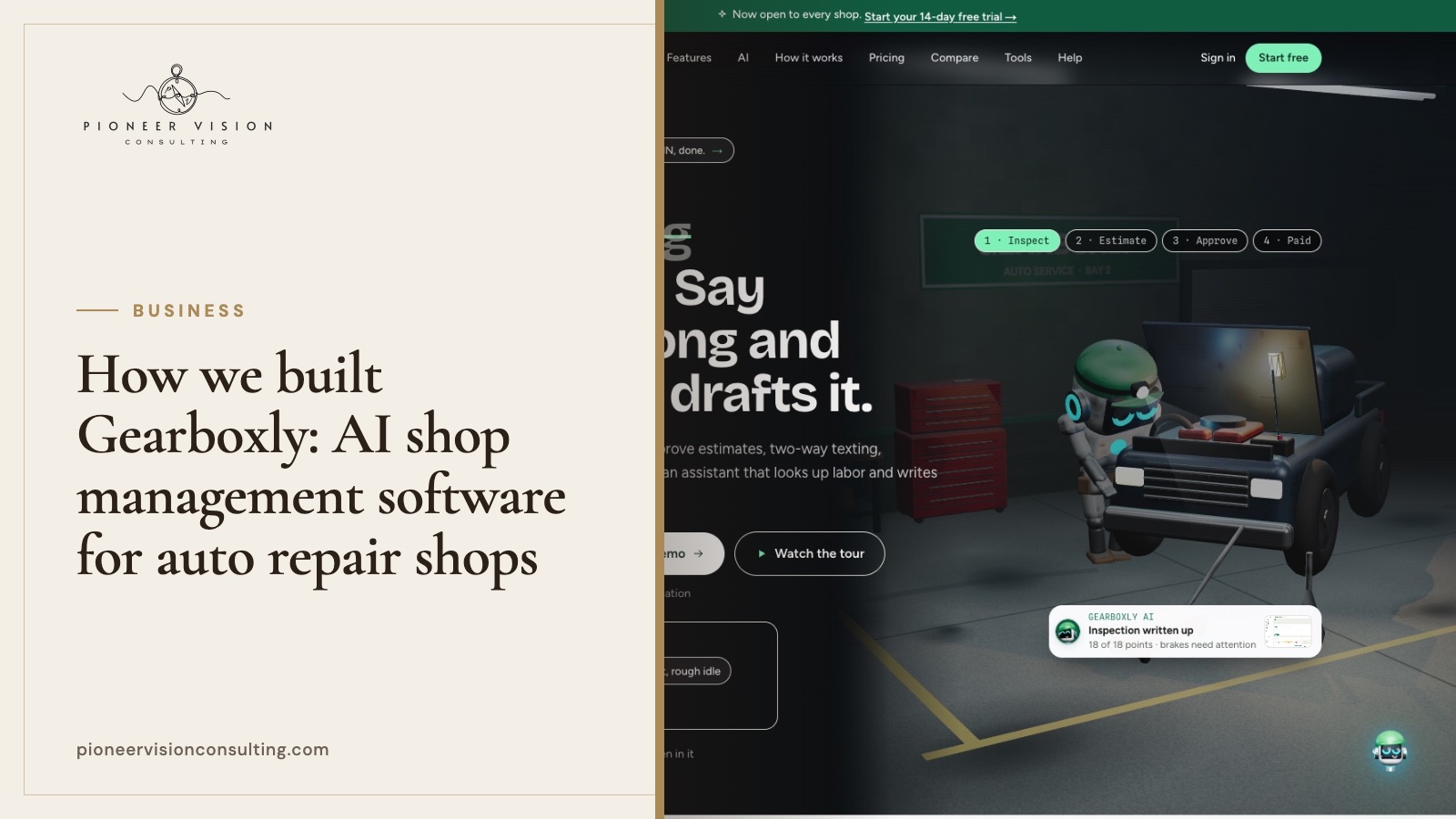
Most of our work is marketing for other people's businesses. Gearboxly is different: it is a software product we designed, built and still market ourselves. It started as a fix for one repair shop's paperwork, and it is now shop management software that any auto repair shop can sign up for. This is how it came together, what it does, and what we learned building it.
Where it started: one shop, too much typing
Gearboxly was built inside Auto Star, an independent repair shop and dealership we also work with on marketing. The problem was familiar to anyone who has stood behind a service counter. Estimates were typed by hand. Labor times were looked up in one place, parts priced in another, and the customer was called, and called again, to approve the work. Inspections lived on paper. Every step was a chance for something to slip.
We did not set out to build a software company. We set out to make that counter faster. So the first version was small and shaped entirely by what the shop needed that week, used on real cars from the start.
What Gearboxly does today
Gearboxly now covers the whole repair, from the moment a car arrives to the moment the invoice is paid, on one record:
- Check-in from the lot. Scan the VIN or snap the plate with a phone. Gearboxly finds the owner and the repair order is on the board before the advisor is back inside.
- Digital inspections. Green, yellow or red for each point, with photos and measurements, written up so the customer can actually understand them.
- Estimates and text-to-approve. Labor and parts in one estimate, sent by text. Customers approve, decline and sign from their phone, and the signed estimate is saved to the repair order.
- Two-way texting. Customers text back to the shop's own number, and every reply lands in one shared inbox.
- Scheduling and online booking. A week planner that shows how full each day is, plus reminders and a booking page.
- Invoices and payments. Card, cash, check or a text-to-pay link, with card payments through Stripe.
- A customer portal. Customers see their cars, past visits, upcoming appointments and rewards under the shop's own name.
Where the AI actually helps
"AI" gets attached to everything now, so we were strict about where it earns a place. In Gearboxly it does the typing, and a person stays in charge of anything a customer sees.
- Estimates from the concern. Tell Gearboxly "grinding when braking" and it drafts an estimate with labor looked up and parts added. The advisor reviews it before it goes anywhere.
- Inspection write-ups. Findings become plain-English explanations a customer can follow.
- Shop Brain. It watches open repair orders and surfaces the ones that need a person, so nothing sits forgotten.
- Deferred-work follow-ups. Work a customer declined comes back up when it is due, which is revenue most shops quietly lose.
- Booking from a chat. Ask the assistant to book an oil change for Thursday morning and it proposes the appointment for you to confirm.
Nothing goes to a customer until someone at the shop approves it. That rule shaped more design decisions than any feature did.
Built by a shop, still used by one
The most useful decision we made was never to move Gearboxly out of the shop it was built in. Auto Star still runs on it every day: at the counter, in the bays and on phones. More than 1,500 repair orders have been written in it. Every new feature, like checking cars in from the lot, is used on real cars before it reaches anyone else.
That kept us honest. A feature that looked good in a demo but slowed down a Saturday morning did not survive the week.
Marketing a product, not just building one
Building the software was half the job. The other half was the same work we do for clients, pointed at our own product:
- A marketing site at gearboxly.com that explains the product in the shop's language, not software language.
- A live demo with no sign-up. Visitors get a private copy of a working shop, already full of cars, customers and repair orders, and a guide walks them through one job start to finish. Nothing they send reaches a real customer, and the copy disappears after 24 hours.
- Short narrated videos of every feature, recorded from the real app rather than mock-ups.
- SEO built in from the first page, with feature pages, comparison pages and a regular what's new log.
- A self-serve 14-day free trial, no credit card, so a shop owner can try it on their own schedule.
What we learned that applies to any business
Most of what made Gearboxly work is not specific to software:
- Start with one real customer. Building for a shop we could walk into beat any amount of guessing.
- Let people try before they talk to you. The no-signup demo does more selling than any page of copy.
- Show the real thing. Real screens and real videos build more trust than polished illustrations.
- Write like your customer talks. "Say what's wrong and Gearboxly drafts it" lands better with a shop owner than any list of features.
See it for yourself
If you run a repair shop, you can try the Gearboxly live demo in about five minutes, or start a free trial at gearboxly.com. If you want the full project write-up, read the Gearboxly case study.
And if you have a product or a business that needs the same treatment, from the website to the demo to the marketing behind it, book a call with us.
Common questions
Who is Gearboxly for?
Independent auto repair shops that want repair orders, inspections, estimates, texting, scheduling and payments in one system.
How much does it cost?
Plans start from $99 per location, with a 14-day free trial and no credit card needed to start.
Does the AI send anything to customers on its own?
No. The AI drafts estimates, write-ups and messages, but nothing goes to a customer until someone at the shop approves it.
Did Pioneer Vision Consulting build it?
Yes. We designed and built the product and run its marketing, and it is operated by Pioneer Vision Consulting LLC.