
Digital marketing for auto repair shops that turns searches into booked bays
Drivers choose a shop the way they choose a doctor: on trust, reviews and convenience, and mostly on their phone, after a warning light. We help independent shops win those searches, make booking effortless and keep the bays full between the busy weeks.
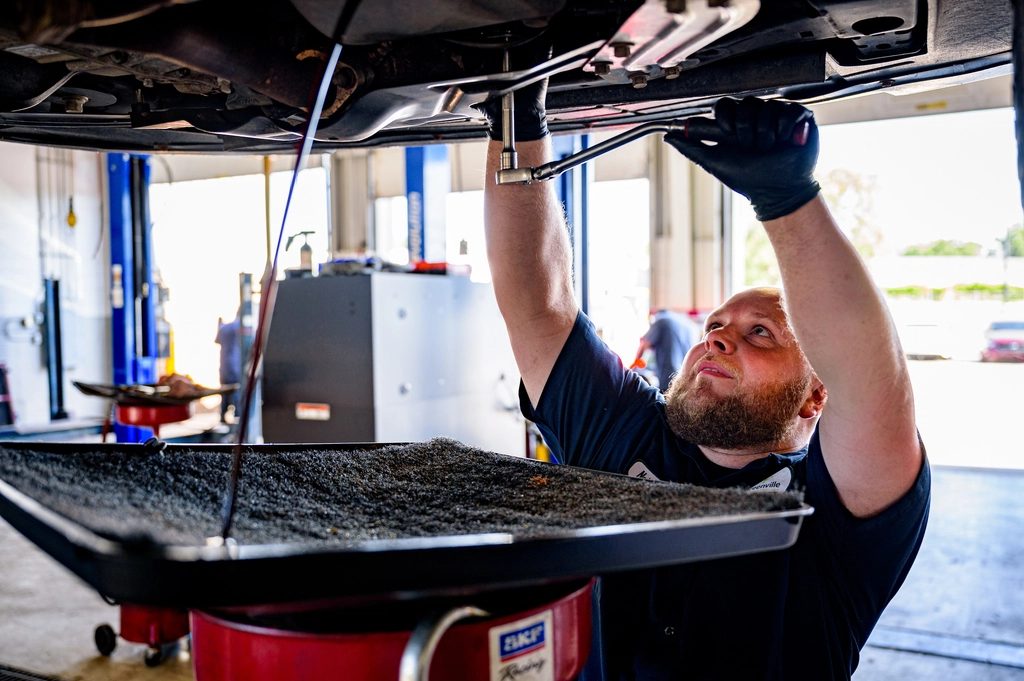
Trust first, price second, distance third
An auto repair customer is worried about being overcharged, wants the car back today, and often has no way to judge the work. So the decision runs on proof (review count and recency, photos of a clean shop, ASE and warranty badges, “we explain before we fix”) and on convenience: online booking, hours, loaner or shuttle, financing for the big repair. Dealers and chains spend heavily on the same searches, so an independent shop wins by looking as trustworthy as the dealer and easier to deal with.
The other difference is repeat business. A plumber may see a household once in five years; a shop sees a good customer twice a year. Marketing that reminds people (service intervals, seasonal checks, a rewards program) pays back for years. We think about acquisition and retention together.
How a driver picks a shop
- A symptom or a schedule. A warning light, a noise, a leak, or an oil change and tires that are due. Searches are symptom- or service-led: “check engine light diagnosis Tacoma”, “brake repair near me”, “oil change Puyallup”, “transmission shop”.
- The map and the reviews. They compare three shops on rating, review count and whether the reviews mention honesty and price.
- The website check. Do they do my make? Do they list the service? Can I book online, and how soon? Is there financing or a coupon? What does the shop look like?
- Book or call. A “Book online” button that shows real availability wins evenings and weekends; click-to-call wins during the day.
- Come back, if reminded. The next visit depends on a service reminder, a review request that felt fair, and a reason to return.
From a warning light to a booked bay
Map Pack and Google Business Profile for shops
Your Google Business Profile is where most drivers compare you. It needs the right primary category (“Auto repair shop”), secondaries for what you specialise in (brake shop, transmission shop, tire shop, auto electrical), a full services list, real photos of the bays, the waiting area and the team, accurate hours, and the booking link. Reviews matter more here than almost any other industry: drivers read them for the word “honest”.
Because a shop is a physical location, proximity does a lot of the ranking work. Two or three locations need separate profiles and separate location pages. One location serving several towns needs area content on the site rather than fake addresses.
- Review requests sent by text at pickup, with a direct link
- Responses to every review, especially the 3-star ones
- Photos of the actual shop, updated monthly
- Q&A seeded with the questions your front desk answers all day (loaners, diagnostics fees, makes serviced)
- Consistent name, address, phone on Google, Yelp, RepairPal, Carfax, Apple Maps
| Factor | What Google is judging | What we work on |
|---|---|---|
| Relevance | How well the profile and website match the words in the search | Primary and secondary categories, a complete services list, the business description, service pages on the site |
| Distance | How close the business is to the searcher (or the place named in the search) | Correct service-area settings, city pages with real detail; distance itself cannot be bought |
| Prominence | How well known and well reviewed the business is | Review count, recency and rating; consistent citations; links and mentions; regular photo uploads |
The three factors are the ones Google itself publishes for local ranking; the weight of each varies by search.
Service pages by repair, not one “services” list
Search demand for auto repair is split across dozens of specific services and symptoms. A page each for brakes, check engine diagnostics, oil changes, AC repair, transmission, suspension, tires and alignment, plus pages for the makes you specialise in, captures searches a single “Services” page never will. Each page should carry the shop’s own photos, a realistic price range or diagnostic fee, and reviews that mention that repair.
Symptom content works well for shops: “why is my car making a grinding noise when braking”, “check engine light on but car runs fine”. It ranks, it pre-qualifies, and it ends with a booking button. We run this under SEO services with the technical work (speed, schema for AutoRepair, mobile) included.
If you also sell cars
Repair and sales searches are different. Keep inventory on its own pages with vehicle schema so “used cars Graham WA” lands on the lot, not the brake page, and cross-link the two so a repair customer sees you sell, and a buyer sees you service.
Paid search for shops: specific services, tight radius
Auto repair ads work when they are specific. Campaigns for brakes, diagnostics, oil changes and AC each land on the matching page with a coupon or a “book now”, never the homepage. Radius targeting keeps spend within the distance a driver will actually travel with a problem. Negative keywords remove parts searches, DIY, “how much does a mechanic make” and the dealer brand terms you will never win.
Offer-led ads (“$X off brakes this month”) outperform generic ones for shops; we rotate them seasonally, AC in June, batteries and tires in October. Call and booking tracking shows which service ads fill bays. Details under Google Ads management.
- One campaign per service, one landing page per campaign
- Seasonal offers rotated on a calendar
- Dealer brand terms excluded unless you specialise in that make
- Booking and call tracking, reported as cost per booked appointment
| Campaign | Example searches | Schedule & targeting | Lands on |
|---|---|---|---|
| Urgent repairs | “brake repair Puyallup”, “check engine light near me” | Shop hours · real drive-time radius · call + book | Service page with booking form |
| Maintenance | “oil change Sumner”, “tire rotation” | Shop hours · tight radius · coupons where used | Maintenance page with online booking |
| High-value work | “transmission repair”, “engine diagnostic” | All day · higher cost per lead accepted | Service page with financing and warranty |
Negative keywords: “DIY”, “parts”, “salary”, “jobs”, car sales and dealership terms unless you sell cars.
How leads typically arrive from Ads and from SEO
Illustrative, not client dataRelative lead flow, not a forecast: ads switch on within days and hold steady with budget; SEO starts slowly and keeps growing without per-click cost. Most clients run both, in sequence.
What an auto repair website must do
Online booking that works
Real availability, service selection, vehicle details, and a confirmation. Evenings and weekends are when people book.
Phone conversion
Click-to-call in the header, hours next to it, and “call for a same-day quote” on every service page.
Financing & coupons
A financing application that starts online and current coupons on the pages where the repair is described.
Live reviews
Google reviews pulled onto the site automatically, so the proof is always current.
Service & make pages
One page per repair and per make you specialise in, with your own photos.
Mobile speed
Most visits are from a phone in a parking lot. Two seconds, or they are gone.
Booked appointments, not just clicks
For a shop, the lead is a booking or a call that becomes a drop-off. We track both by source, connect online booking to your shop management system where possible, and set up the retention side: service-interval reminders, a review request at pickup, and a rewards or referral program if you want one. The common problems: a booking widget that emails a form nobody sees, no reminder system, and reviews requested only when someone remembers.
A hypothetical plan for an independent shop
Scenario: a four-bay independent shop in Puyallup with strong reviews but a five-year-old website and no online booking.
profile cleanup (categories, services, 30 real photos, booking link), text-based review requests at pickup, and a new mobile-first site with online booking, financing and live reviews.
service pages for brakes, diagnostics, oil change, AC and the two makes they see most; a brake-offer Google Ads campaign with a five-mile radius and booking tracking.
seasonal offer rotation, a reminder email/text for customers seen 5–6 months ago, and a review of which ads produced bookings. Whether the bays fill faster depends on the shop’s pricing, capacity and reputation; we track bookings by source and adjust.
KPIs for an auto repair shop
Auto Star Repair & Sales
A fast, custom-built website for a Graham, WA auto shop that also runs a used-car lot: online appointment booking, a financing application flow, live Google reviews, a used-car inventory and rewards portal, and local SEO for Graham, Frederickson, Elk Plain and Spanaway, designed, built and managed by Pioneer Vision Consulting.
Read the case study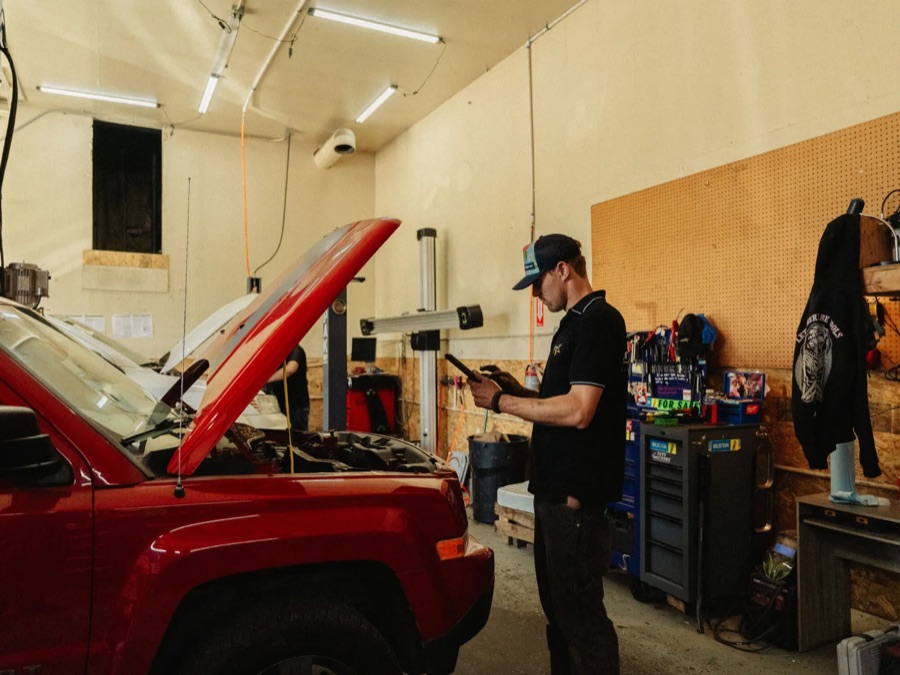
Auto repair marketing questions
How do we compete with the dealer on Google?
You will rarely outrank a dealer for its brand name, and you should not try. You win on specific services (“brake repair Tacoma”), on reviews that mention honesty and price, and on convenience, online booking and clear pricing the dealer does not show.
Is online booking really necessary?
If you want evening and weekend customers, yes. Many drivers decide after hours and will book with whoever lets them. A phone number alone loses those.
What should our review strategy be?
Ask at pickup by text with a direct link, every time, and respond to every review. Volume and recency move the Map Pack; responses show the next customer how you handle problems.
Can you market both the repair shop and the car sales side?
Yes. That was the Auto Star project: separate pages and schema for inventory and for repair, cross-linked so each side feeds the other.
How much does it cost?
A profile and review system is inexpensive; a new site with booking and financing is a one-time project; SEO and ads are monthly. Ask for an audit and we will size it for your shop rather than quote a package blind.
Get a free auto shop marketing audit
We will check how you show up for the repairs you want more of, whether your booking flow works on a phone, and what your reviews say to a first-time customer, then tell you what to fix first.