
Digital marketing for HVAC companies, built around two weeks of the year
Most of an HVAC year is decided by a handful of days: the first hot week of summer and the first hard freeze. The companies that win those days are visible before the weather turns, and the rest of the year they are selling replacements and maintenance plans rather than waiting for the phone.
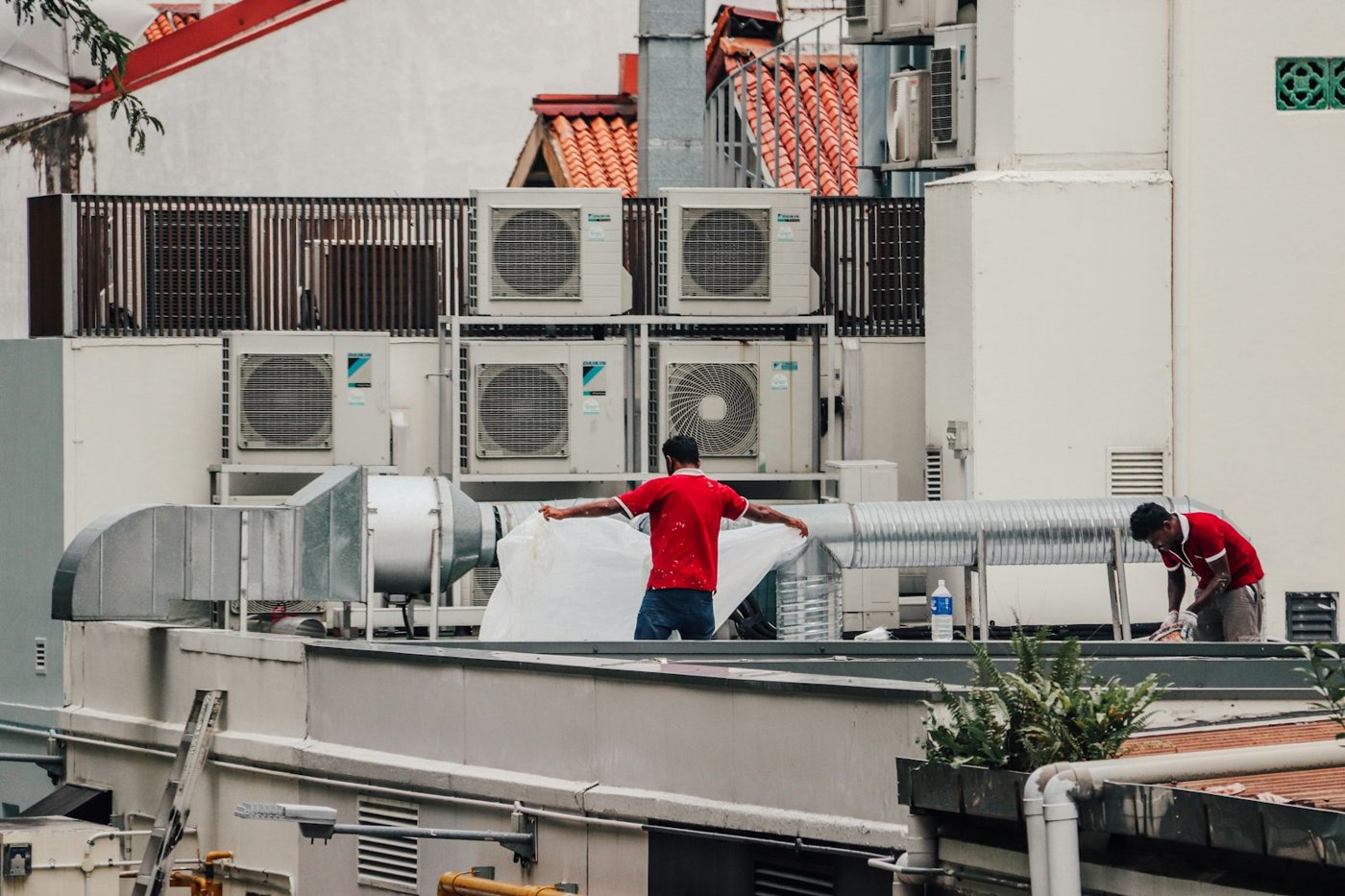
Weather sets the demand, margin sits in replacement
Three things shape HVAC marketing. First, demand arrives in spikes tied to the weather, and everyone in the county is bidding on the same words in the same week. Second, the money is in replacement: a repair call is worth a fraction of a system replacement, and the two customers behave completely differently. Third, maintenance plans are the stabiliser, turning a seasonal business into recurring revenue and a list of customers who call you first.
The usual failures are predictable: one page listing every service, ads switched on after the heatwave has started, no financing information anywhere on the site, and no system for converting a repair visit into a plan.
How a homeowner picks an HVAC company
- Something stops working, usually on the hottest or coldest day. The search is “AC repair near me”, “furnace not working”, “no heat” plus the town, on a phone, that same hour.
- They scan the map results. Rating, review count, whether it says open now. Nobody scrolls in a house that is 90 degrees.
- They call two or three companies. Whoever answers, gives a real arrival window and a diagnostic price gets the visit.
- For replacement, they slow down. Two or three quotes over a week, comparing system options, warranty, financing and how the estimator behaved.
- They decide about the plan. A maintenance agreement is sold at the end of a good visit, not by an ad.
From a broken system to a booked truck
Being in the map box when the weather turns
Emergency HVAC calls go to the three businesses in the map results. Your Google Business Profile needs the primary category HVAC contractor, secondaries for air conditioning contractor, heating contractor and furnace repair service where they apply, every service listed, and hours that state your genuine after-hours availability. Review volume decides most of the rest, and reviews should be requested after every completed job rather than in a burst before summer.
- Primary category HVAC contractor, with secondaries matched to what you actually do
- Service area set to the towns your trucks reach within your promised window
- Photos of installs, equipment and technicians, uploaded monthly rather than once
- A review request after every job, so volume and recency both build
- Consistent name, phone and address across directories, manufacturer dealer listings included
| Factor | What Google is judging | What we work on |
|---|---|---|
| Relevance | How well the profile and website match the words in the search | Primary and secondary categories, a complete services list, the business description, service pages on the site |
| Distance | How close the business is to the searcher (or the place named in the search) | Correct service-area settings, city pages with real detail; distance itself cannot be bought |
| Prominence | How well known and well reviewed the business is | Review count, recency and rating; consistent citations; links and mentions; regular photo uploads |
The three factors are the ones Google itself publishes for local ranking; the weight of each varies by search.
A page per system, a page per town, content before the season
HVAC SEO is service by system by area: separate pages for AC repair, AC installation, furnace repair, furnace replacement, heat pumps, ductless mini splits, ductwork and indoor air quality, each written for someone about to spend money. Then pages for the towns you serve, with real local detail rather than a template.
The content that earns replacement work is seasonal and practical: what a system replacement costs and what drives the price, heat pump versus furnace in this climate, how long a system lasts, what a maintenance visit includes. Publish it six weeks before the season, not during it.
Rebates and financing pages
Utility rebates and manufacturer promotions are searched by name every year, and almost nobody writes the page. A clear page explaining current rebates, financing options and what a monthly payment looks like captures people at exactly the moment they are deciding whether they can afford a replacement.
Ads that follow the forecast
An HVAC account should have separate campaigns for emergency repair, replacement and maintenance plans, each with its own schedule and landing page. The repair campaign runs during dispatch hours with call assets and raises bids when the forecast turns. The replacement campaign runs all day on higher bids, landing on a page with system options, financing and a form. Maintenance runs at a low budget year round.
Negative keywords matter as much as anything: filters, thermostats, portable units, parts, DIY repair and job searches will otherwise take a large share of the budget.
- Bid rules prepared before the first heatwave and the first freeze, not after
- Separate campaigns for repair, replacement and maintenance plans
- Call tracking on every campaign, with a minimum call length that counts as a lead
- Negatives for parts, filters, thermostats, DIY and job searches
| Campaign | Example searches | Schedule & targeting | Lands on |
|---|---|---|---|
| Emergency repair | “AC repair near me”, “furnace not working” | Dispatch hours, forecast bid rules, call assets | One-screen page with the number and the diagnostic fee |
| Replacement | “AC replacement cost”, “new furnace installation” | All day, higher bids, real service area | System options, financing and an estimate form |
| Maintenance plans | “AC tune up”, “HVAC maintenance plan” | Low always-on budget | Plan page with what each visit covers |
Negatives from day one: filters, thermostats, portable units, parts, DIY and job searches.
How leads typically arrive from Ads and from SEO
Illustrative, not client dataRelative lead flow, not a forecast: ads switch on within days and hold steady with budget; SEO starts slowly and keeps growing without per-click cost. Most clients run both, in sequence.
What an HVAC website has to do
Answer the emergency
Phone number in the header, click to call on mobile, and honest hours including whether you answer at night.
Price the diagnosis
A diagnostic fee stated plainly, credited against the repair, removes the biggest hesitation before a call.
Explain the replacement
System options, what drives the price, timelines and what happens to the old unit. This page carries the highest value work on the site.
Show the financing
Named financing options and a monthly figure. Replacement is often an unplanned expense and silence loses the job.
Sell the plan
A maintenance page describing exactly what each visit covers, what it costs and what priority it buys during a heatwave.
Prove it
Licence, bonding, manufacturer certifications, years in business, real photos of installs and a live review feed.
We design and build these under web design and development.
From a repair visit to a customer for a decade
The most profitable thing in HVAC marketing is not a new lead, it is what happens at the end of a repair. A technician who leaves behind a maintenance plan, a photographed record of the system age and a review request turns a one-off call into recurring revenue and a replacement conversation three years early.
On the marketing side that means tracking calls by campaign, tracking which of those became a replacement quote, and following up on quotes that went quiet. Most HVAC companies discover their biggest leak is unquoted or unfollowed estimates rather than a shortage of calls.
A hypothetical 90-day plan
Scenario: a four-truck HVAC company in Puyallup serving Sumner, Bonney Lake and South Hill, strong on repair, weak on replacement, with 90 Google reviews and a five-page website.
rebuild the Google Business Profile, install call tracking, launch the emergency repair campaign on dispatch hours with the negative list, and put the diagnostic fee and click to call on every page.
publish replacement, heat pump and financing pages; launch the replacement campaign; start the review request after every completed job.
add the maintenance plan page and low-budget campaign, review which campaigns produced quotes rather than calls, and set the bid rules for the coming season.
What we report every month
HVAC marketing questions
When should we turn ads up for summer?
Before the forecast, not during it. We set bid rules and budgets ahead of the season so the first hot week is a switch rather than a scramble, because by the time the calls start every competitor is bidding too.
Is it worth advertising maintenance plans?
At a low budget, yes, but most plans are sold at the end of a service visit. The marketing job is the page that explains the plan clearly so the technician has something to point at.
We get repair calls but few replacements. Why?
Usually because the site has no replacement page, no financing information and no system comparison, so the searcher who is pricing a new system never finds a reason to call you.
Do manufacturer dealer listings matter?
Yes, both as a source of referrals and as citations that support your local ranking. Keep the details identical to your profile.
What do you need from us to start?
Access to the Google profile and the website, your real service area and dispatch hours, your diagnostic fee, financing details and photos of recent installs.
Get a free HVAC marketing audit
Send us your company name and website. We will check your Map Pack position for repair terms in each town you serve, look at whether your site can sell a replacement, and tell you the three fixes that matter before the next season.