
Digital marketing for landscapers, where the whole year is decided in spring
Landscaping demand is brutally seasonal and the customers are two different businesses. Maintenance is a route business built on recurring contracts and density. Design, hardscape and installation is a project business built on photographs and trust. Marketing that treats them as one thing underperforms at both.
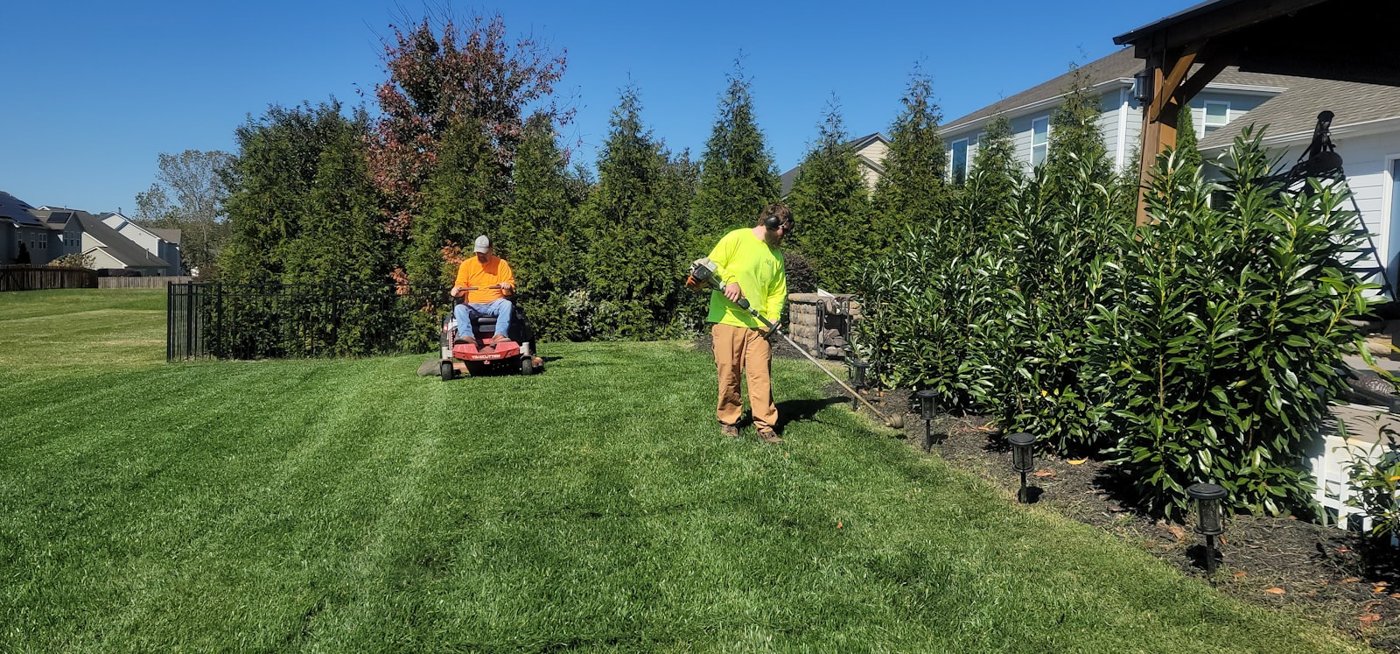
A route business and a project business sharing one phone number
Maintenance work is won on price, reliability and proximity, and its economics depend on how tightly your route is packed. Adding a customer two towns away can cost more in drive time than the contract is worth, which is why targeting matters more here than in almost any other trade.
Design and installation work is the opposite. It is chosen on photographs of finished projects, on the quality of the consultation and on whether the customer believes the crew will show up. The searches are different, the pages should be different, and the ad budgets should be different.
How a homeowner picks a landscaper
- Spring arrives and the yard is a problem. The search is “lawn care near me”, “landscaping companies” plus the town, often in a two-week window when everyone else is searching too.
- They look at photos first. This is a visual purchase. A profile or site without finished project photos is dismissed quickly.
- They request quotes from two or three. For maintenance, whoever replies with a price fastest usually wins. For projects, the reply speed matters less than the portfolio.
- They judge the site visit. Turning up on time with a tidy truck is marketing, and it decides more landscaping quotes than the website did.
- They stay or leave after one season. Maintenance retention is where the profit lives, and it is decided by consistency rather than advertising.
How a homeowner picks a landscaper
Ranking where your route already runs
For maintenance, tight geography is the whole game. Set the service area to the neighbourhoods you actually want to add to a route, and build town pages only where extra density helps. The Google Business Profile should use the primary category Landscaper or Lawn care service depending on your mix, list every service, and carry a steady flow of project photos, which perform unusually well in this category.
- Primary category matched to your main revenue, with secondaries for design, hardscape and irrigation
- Service area drawn around route density rather than the widest area you could reach
- Project photos uploaded weekly during the season, since this is a visual decision
- Review requests at the end of a project and after the first month of a maintenance contract
- Seasonal hours and clear communication about when the crew stops for winter
| Factor | What Google is judging | What we work on |
|---|---|---|
| Relevance | How well the profile and website match the words in the search | Primary and secondary categories, a complete services list, the business description, service pages on the site |
| Distance | How close the business is to the searcher (or the place named in the search) | Correct service-area settings, city pages with real detail; distance itself cannot be bought |
| Prominence | How well known and well reviewed the business is | Review count, recency and rating; consistent citations; links and mentions; regular photo uploads |
The three factors are the ones Google itself publishes for local ranking; the weight of each varies by search.
Pages for the projects, and a plan for the off season
Landscaping SEO splits the same way the business does. Maintenance needs service and area pages: lawn mowing, fertilisation, aeration, spring and autumn cleanups, each in the towns on your route. Projects need portfolio-style pages: patios and pavers, retaining walls, irrigation, drainage, planting design, outdoor lighting, artificial turf.
The off season is when this work should be done. Publishing project pages in January means they are ranking by March, which is the difference between competing for the spring rush and arriving after it.
Drainage and problem pages
In this climate, drainage, moss, mud and standing water are searched all winter by homeowners with a specific and urgent problem. Those pages are easy to rank and lead directly to projects that most competitors are not chasing.
A short, sharp season
Landscaping ads should be heavily weighted toward the eight to ten weeks when people search. We run a maintenance campaign tightly geo-fenced to route areas at modest bids, and a projects campaign at higher bids landing on the relevant project page with a gallery and a quote form. Both stop or drop when the schedule is full, because buying quotes you cannot deliver until August produces cancellations rather than revenue.
- Budget weighted to the spring window, with a smaller autumn cleanup push
- Maintenance campaigns geo-fenced to route density, not the whole county
- Project campaigns land on gallery pages with a quote form
- Pause or reduce when the schedule fills, rather than collecting quotes you cannot serve
| Campaign | Example searches | Schedule & targeting | Lands on |
|---|---|---|---|
| Maintenance | “lawn care near me” plus the town | Geo-fenced to route density, modest bids | Quick quote form that accepts photos |
| Projects | “paver patio installation”, “retaining wall” | Higher bids, wider radius | Gallery page with a consultation form |
| Seasonal cleanup | “spring cleanup”, “fall cleanup” | A few weeks in spring and autumn | Cleanup page with a date picker |
Negatives: mowers, equipment, plants, nurseries, jobs and DIY searches.
How leads typically arrive from Ads and from SEO
Illustrative, not client dataRelative lead flow, not a forecast: ads switch on within days and hold steady with budget; SEO starts slowly and keeps growing without per-click cost. Most clients run both, in sequence.
What a landscaping website has to do
Lead with photographs
Before and after galleries organised by project type. This is the single biggest factor in landscaping conversion.
Separate the two businesses
Maintenance pricing and sign-up on one path, project consultations on another. Mixing them confuses both.
Give a price range
Even a rough per-visit maintenance price or a starting figure for a patio filters enquiries usefully.
Make quoting easy
A form that asks for the address, the problem and a photo saves a site visit and speeds up the reply.
Show the crew
Homeowners are letting people onto their property regularly. Photos of the real team and marked vehicles help.
Explain the season
When you start, when you stop and how winter is handled. Clarity here prevents most complaints.
We design and build these under web design and development.
Reply speed decides the maintenance market
In maintenance work, the fastest quote usually wins. Not the cheapest, the fastest. Companies that reply within an hour during spring take contracts from better companies that reply in three days, and by June there is nothing left to win.
That makes the practical work here operational: a form that collects enough to quote without a visit, a phone answered during the rush, and a follow-up on quotes that went quiet. On the project side, the follow-up matters even more, because a patio quote often sits for weeks while the homeowner decides.
A hypothetical 90-day plan
Scenario: a landscaping company in Sumner running three maintenance crews and doing occasional hardscape projects, with 70 reviews and a website with a small gallery.
rebuild the profile with categories and services, launch a geo-fenced maintenance campaign, add a quoting form that accepts photos, and start weekly photo uploads.
publish patio, retaining wall and drainage project pages with galleries, launch the projects campaign, and add town pages where route density is wanted.
review quotes and contracts by source, cut the areas that produced long drives rather than density, and plan the autumn cleanup push.
What we report every month
Landscaping marketing questions
When should we start marketing for spring?
The pages should be published in winter so they are ranking when the searches begin, and the ads should be live a fortnight before the first warm weekend rather than after it.
Is it worth advertising maintenance if we are full?
No. Pause it. Buying contracts you cannot service creates cancellations and poor reviews, and a paused campaign is easy to switch back on.
How important are photos really?
More than anything else on the page. Landscaping is bought with the eyes, and phone photos of finished work are enough if they are well lit and consistent.
Do we need separate pages for each town?
For the towns you want route density in, yes. Not for every town within driving distance.
What do you need from us to start?
Profile and website access, your route map, your service list and prices where you have them, and a folder of project photos.
Get a free landscaping marketing audit
Send us your company name and the areas your crews already cover. We will check what you rank for in those neighbourhoods and tell you which pages to publish before the season starts.