
Digital marketing for towing companies where the customer is on the shoulder of the road
Nobody plans to need a tow. The search happens from a phone, on the roadside, with the hazards on, and the driver calls the first credible number they see. Towing marketing is a race measured in seconds and in miles: be visible where the breakdown happens, answer instantly, and dispatch fast. Here is how we approach it.
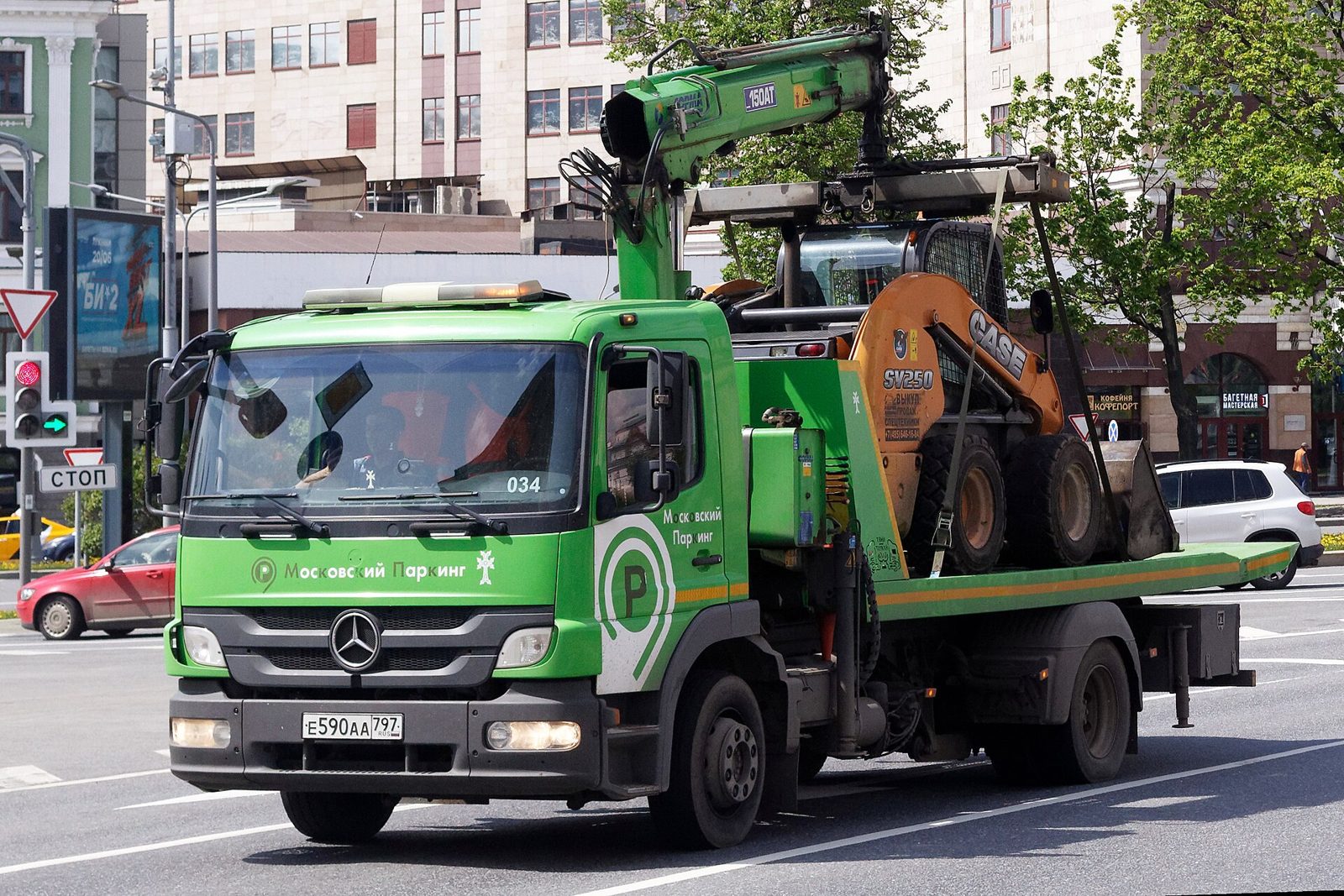
Seconds, miles and one tap
Towing has the shortest buying journey of any local business. The driver searches “tow truck near me” or “towing Tacoma”, looks at the first three map results, and taps whichever one is close, open now and has a phone number they can hit with a thumb. There is no reading, no comparing websites, no form-filling. Proximity to the searcher drives the map ranking, which is why a company that dominates one interchange can be invisible fifteen miles away. Planned work (impound and private-property towing, dealership transport, equipment and heavy-duty hauling) behaves differently: those customers compare, call in office hours and care about insurance, capacity and reliability.
Most towing marketing fails on the basics: a profile with the wrong category or an outdated number, a website where the phone number is below three screens of text, ads running while the phone goes to voicemail, and lead-generation platforms selling the same call to four operators. Your marketing has to put a tappable number in front of a stranded driver instantly, and then answer.
How a stranded driver finds a tow
- Search from the roadside: “tow truck near me”, “24 hour towing Puyallup”, “roadside assistance I-5”, “flatbed tow”. Often through the phone’s voice assistant.
- Scan three map results. Open now, distance, rating, and whether the call button is right there. That is the whole comparison.
- Tap to call. If the number is not tappable or the call is not answered within a few rings, they hit the next result.
- Judge the call. A confident answer, an honest ETA and a price range wins. Being put on hold loses.
- Leave a review, if asked. Roadside rescues earn strong reviews when the request arrives by text an hour later.
Thirty seconds from a breakdown to a dispatch
Winning the Map Pack along your routes
The Google Business Profile is where towing is won. Primary category “Towing service” (with Auto wrecker, Roadside assistance and Vehicle transport as secondaries where they apply), a full services list (flatbed, wheel-lift, motorcycle, jump-start, lockout, tire change, winch-out, heavy-duty), true 24/7 hours, photos of your trucks and crew, and above all review volume and recency. As a service-area business you hide the address and list the cities and highways you cover; since ranking follows the searcher’s location, we pair the profile with city and corridor pages on the website so that searches away from your yard still find you.
- Correct primary and secondary categories; “24 hours” set only if true
- Every tow and roadside service listed with a description and a “from” price where you are comfortable
- A review-request text sent after every completed job
- Weekly photos: trucks, crew, jobs (no plates or faces without consent)
- Consistent name, phone and service area across Google, Yelp, Apple Maps and roadside-club listings
| Factor | What Google is judging | What we work on |
|---|---|---|
| Relevance | How well the profile and website match the words in the search | Primary and secondary categories, a complete services list, the business description, service pages on the site |
| Distance | How close the business is to the searcher (or the place named in the search) | Correct service-area settings, city pages with real detail; distance itself cannot be bought |
| Prominence | How well known and well reviewed the business is | Review count, recency and rating; consistent citations; links and mentions; regular photo uploads |
The three factors are the ones Google itself publishes for local ranking; the weight of each varies by search.
Service and corridor pages that catch the searches you cannot buy
Towing SEO is built on service pages (flatbed towing, motorcycle towing, lockout, jump-start, winch-out, heavy-duty, accident recovery, private-property and impound towing, dealership and auction transport) and area pages for the cities and highway corridors you actually run, with real detail about response times, common breakdown spots and where you deliver vehicles. Technical basics matter more than in most industries: the site must load in under two seconds on mobile data, show the phone number in the header of every page, and carry schema that tells Google you are a towing service covering specific cities. We handle it all under SEO services.
Content for the planned side
Guides on “what to do after a breakdown on I-5”, “how much does a tow cost in Pierce County” and “private property towing rules in Washington” rank for months, answer the office-hours enquiries and pre-qualify property managers and dealers who need a regular provider.
Call-only ads, scheduled to when you dispatch
Towing keywords are expensive and convert instantly, so campaigns are built for calls, not clicks: call-only and call-first ads for emergency terms, geo-targeting along your real routes rather than a county circle, ad schedules matched to when the phone is actually answered, and negative keywords that remove “jobs”, “salary”, “tow truck for sale”, “towing capacity” and vehicle-hitch searches. High-value planned services (heavy-duty, transport, impound contracts) get their own campaigns with landing pages. Every call is tracked and recorded so the monthly report shows cost per answered call and which campaigns produce dispatches. See Google Ads management.
- Call-only ads with call tracking on every emergency campaign
- Schedules and budgets that follow dispatch hours and capacity
- Route- and corridor-based geo-targeting
- No spend on searches for trucks, jobs or equipment
| Campaign | Example searches | Schedule & targeting | Lands on |
|---|---|---|---|
| Emergency | “tow truck near me”, “24 hour towing Tacoma” | Call-only ads · dispatch hours · corridor targeting | Call, or a one-screen page with the number |
| Roadside | “jump start service”, “car lockout” | Same schedule · same radius | Service page with tap-to-call |
| Heavy-duty & transport | “heavy duty towing”, “vehicle transport” | Office hours · county-wide · form + call | Commercial page with capacity and form |
Negative keywords: “jobs”, “salary”, “tow truck for sale”, “towing capacity”, hitch and trailer searches.
How leads typically arrive from Ads and from SEO
Illustrative, not client dataRelative lead flow, not a forecast: ads switch on within days and hold steady with budget; SEO starts slowly and keeps growing without per-click cost. Most clients run both, in sequence.
What a towing website has to do
Put the number first
A tappable phone number in the header and a sticky call button on mobile, on every page, the site’s only real job.
Say where and when
Service area, response-time expectations and 24/7 availability (if true) above the fold.
One page per tow type
Flatbed, motorcycle, heavy-duty, lockout, jump-start, winch-out. Each its own page with photos of your trucks.
Prove it
Reviews, licensing, insurance, years in business and photos of real jobs. Drivers are handing you their car.
Load instantly
Compressed images, no bloat, a first screen that renders in a second on one bar of signal.
Serve the planned side
Pages for property managers, dealerships and fleet accounts, with a form and office-hours contact.
We design and build these under web design & development.
From a roadside search to a dispatched truck
A towing lead lasts about thirty seconds. We track and record calls by source so you know which campaign produced which dispatch, set up missed-call text-back so an unanswered call still gets a reply while the driver is deciding, and route after-hours calls to whoever is on shift. Reviews close the loop: a job that ends with a review request by text feeds the map ranking that produced the next call. Common problems we fix: leads bought from platforms with no attribution, the same number on the site and the ads so nothing can be measured, and ads running while nobody is on the phone.
A hypothetical 90-day plan for a small towing company
Scenario: a four-truck towing company based in Tacoma running the I-5 and SR-167 corridors, with a one-page website, 40 reviews and leads partly bought from a national platform.
rebuild the Google profile (categories, services, service area, 40 real photos), add a review-request text after every job, put a sticky call button on the site, and launch one call-only Google Ads campaign for emergency terms scheduled to dispatch hours with call tracking.
publish service pages for flatbed, motorcycle and heavy-duty towing and area pages for Tacoma, Puyallup and Federal Way with real corridor detail; add a fleet and property-manager page with a form; start a second campaign for heavy-duty.
compare cost per answered call across the campaigns and the platform leads, shift budget to what dispatches, publish two guides for the planned side, and review after-hours answer rates.
KPIs that matter for a towing company
Fly Towing
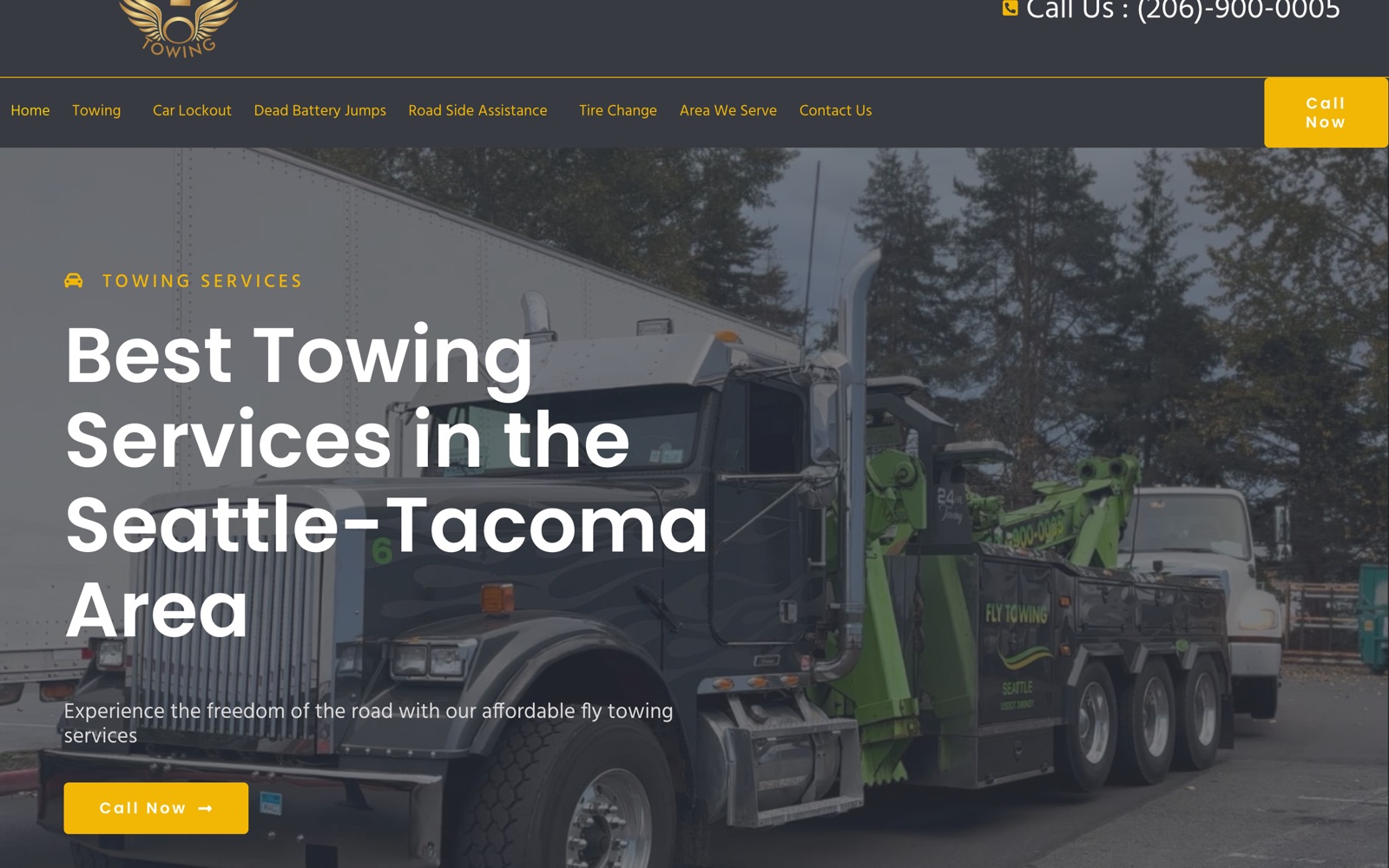
For Fly Towing, a 24/7 towing and roadside-assistance company serving the Seattle–Tacoma area, we designed and built a mobile-first website with click-to-call throughout, wrote and structured service pages for flatbed, car, lockout, jump-start and more, set up service-area and local SEO, and tuned performance for phones on the roadside. Call volumes and rankings are reported to the client privately; no figures are published here.
Towing marketing questions
Should we keep buying leads from the national platforms?
Keep them only while you measure them. Once your profile, site and call-only ads produce answered calls at a known cost, most operators find their own channels cheaper and exclusive, the platform sells the same call to several companies.
Why do we rank in Tacoma but not in Puyallup?
Proximity. Google ranks service-area businesses by the searcher’s distance from your location. Area pages, a correctly set service area, reviews that mention the towns and, where it makes sense, ads along the corridor close the gap.
Do call-only ads really work for towing?
They are the best fit of any industry we work in: the customer wants to call, not browse. The discipline is scheduling them to when you answer and tracking every call.
We do impound and private-property towing. Is that marketable?
Yes, but to a different buyer, property managers, HOAs and businesses who research and compare. That side gets its own pages, its own campaign and office-hours follow-up.
What do you need from us to start?
Access to your Google profile and website, your real service list, hours and coverage area, call-answering arrangements by shift, and a few dozen photos of trucks and jobs. Then we run the audit.
Get a free towing marketing audit
Send us your company name and website. We will check your Map Pack visibility along your routes, your emergency-search presence and your site’s call flow, and tell you the three fixes that will produce answered calls first.