
Digital marketing for plumbers who want the phone to ring at the right moment
Plumbing is bought in emergencies and replaced on a budget. Your marketing has to win the 11pm “burst pipe” search and the Saturday-morning “water heater replacement cost” search, and it has to survive a homeowner who calls three shops and hires the first one to answer. Here is how we approach it.
Two customers, two clocks
Most plumbing revenue comes from two very different moments. The emergency customer has water on the floor, searches on a phone, reads nothing, and calls whichever business shows up first with a good rating and a phone number they can tap. Speed, proximity and reviews decide it. The planned customer (water heater, repipe, sewer line, remodel rough-in) researches for days, compares two or three quotes, reads reviews closely and cares about price, financing and warranty.
Most plumbing websites serve neither well: a generic “we do it all” homepage, no service-specific pages, a contact form instead of a phone number, and a Google Business Profile with a handful of reviews and no photos. Meanwhile the service area is contested by franchises and lead-gen sites bidding on the same keywords. Your marketing has to be built for both clocks at once.
How a homeowner finds a plumber
- Search on a phone, usually with the problem and the town: “emergency plumber Puyallup”, “drain cleaning near me”, “water heater leaking”, “sewer line repair cost”.
- Scan the map results. Rating, review count, “open now”, distance. A profile with 12 reviews loses to one with 140, even if the work is better.
- Tap, don’t read. Emergency callers tap the call button on the profile or the site header. If the number is buried, they hit back.
- For planned work, compare. They open two or three sites, look for the specific service (tankless, repipe, hydro-jetting), pricing signals, financing, licence and warranty, and recent reviews that mention that job.
- Call, and judge the call. Whoever answers, gives a window and a price range, and sounds organised wins.
From a burst pipe to a booked plumber
Winning the Map Pack for plumbing searches
The three businesses in Google’s map box take most emergency calls. Ranking there is driven by your Google Business Profile: the right primary category (“Plumber”), a full services list (drain cleaning, water heater repair, sewer repair, leak detection, repiping, gas lines), photos of real jobs and trucks, hours that include your actual after-hours availability, and, above all, review volume and recency.
Because plumbers are service-area businesses, your profile should hide the address and list the cities you dispatch to. Ranking then depends on proximity to the searcher, which is why one profile rarely dominates a whole county, and why we build city-specific service pages on your website to cover the rest.
- Primary category: Plumber; secondary: Drainage service, Water heater installation, Gas installation where applicable
- Every service listed with a description, priced “from” where you are comfortable
- A review-request routine that runs after every completed job (text link, not a plea)
- Weekly photo uploads: before/after, trucks, team, no stock
- Consistent name, phone and service area across your site, Yelp, Angi, Nextdoor and the BBB
| Factor | What Google is judging | What we work on |
|---|---|---|
| Relevance | How well the profile and website match the words in the search | Primary and secondary categories, a complete services list, the business description, service pages on the site |
| Distance | How close the business is to the searcher (or the place named in the search) | Correct service-area settings, city pages with real detail; distance itself cannot be bought |
| Prominence | How well known and well reviewed the business is | Review count, recency and rating; consistent citations; links and mentions; regular photo uploads |
The three factors are the ones Google itself publishes for local ranking; the weight of each varies by search.
Service pages that rank for the jobs you want more of
A plumber’s SEO is mostly about service × area pages: one page per high-value service (water heater replacement, tankless installation, sewer line repair, hydro-jetting, repiping, leak detection, sump pumps) written for the person about to hire, what it costs, what is involved, how long it takes, what can go wrong, and photos of your own jobs. Then area pages for the towns you actually serve, each with real detail about that territory, not a find-and-replace of the city name.
Technical basics matter more than most owners expect: a site that loads in under three seconds on a phone, click-to-call in the header, schema that tells Google you are a plumber serving specific cities, and no broken pages. We handle all of it under SEO services.
Content that earns planned-work leads
Short, honest guides answer the questions homeowners search before hiring: “tank vs tankless water heater”, “signs your sewer line is failing”, “why does my drain keep clogging”. Each one links to the service page and ends with a way to book. They rank for months and pre-qualify the caller.
Paid search for plumbers: emergencies first, replacements second
Plumbing keywords are expensive because they convert. That makes structure everything. We run separate campaigns for emergency terms (scheduled to the hours you dispatch, with call-only or call-first ads), core services (drain cleaning, leak repair) and high-ticket replacements (water heater, sewer line, repipe) where a single job justifies a higher cost per lead. Geo-targeting matches your real dispatch area; negative keywords remove “DIY”, “how to”, “jobs”, “salary”, plumbing supply searches and neighbouring cities you do not serve.
Every campaign lands on a page built for it (phone number first, three reviews, service area, a short form) and every call is tracked so the monthly report shows cost per call, not cost per click. See Google Ads management.
- Call extensions and call tracking on every ad
- Ad schedules that match who is actually answering the phone
- Budget shifted monthly toward campaigns that produce booked jobs
- No ads for services you do not want more of
| Campaign | Example searches | Schedule & targeting | Lands on |
|---|---|---|---|
| Emergency | “emergency plumber Puyallup”, “burst pipe repair near me” | Dispatch hours only · real dispatch radius · call-only ads | One-screen page: phone, area, three reviews |
| Core services | “drain cleaning Tacoma”, “leak repair” | Business hours · service area · call + form | Service page with pricing signals |
| High-ticket replacements | “water heater replacement cost”, “sewer line repair” | All day · higher cost per lead accepted · remarketing | Service page with financing and warranty |
Negative keywords maintained weekly: “DIY”, “how to”, “jobs”, “salary”, plumbing supply, towns you do not serve.
How leads typically arrive from Ads and from SEO
Illustrative, not client dataRelative lead flow, not a forecast: ads switch on within days and hold steady with budget; SEO starts slowly and keeps growing without per-click cost. Most clients run both, in sequence.
What a plumbing website has to do
Convert in one thumb
Phone number in the header on every page, click-to-call, “Book online” for planned work, and hours that say when you actually pick up.
Prove it fast
Live Google reviews, licence and insurance, years in business, photos of your team and trucks. Homeowners are letting you into their house.
Price without scaring
“Starting at” prices, dispatch fees explained, financing for replacements. Silence on price sends planned customers to a competitor who talks.
One page per service
Not a list of 30 bullets, a page for each service you want to be hired for, with its own photos and FAQs.
Load fast on a phone
Emergency searches happen on mobile data. Compressed images, no bloat, a site that is usable in two seconds.
Capture after-hours
If nobody answers at night, a short form with “when do you need us” and an automatic text back beats a lost call.
We design and build these under web design & development.
From search to a booked job
A plumbing lead is only valuable if someone answers. We track calls and forms by source so you know which campaign produced which job, set up missed-call text-back so an unanswered emergency call still becomes a conversation, and connect forms to your dispatch process. Reviews close the loop: a job that ends with a review request feeds the Map Pack ranking that produced the next job.
Common problems we fix: leads with no source attached, the same phone number on the site and the ads (so nothing can be measured), forms that go to an inbox nobody checks, and ads running at 2am when the phone goes to voicemail.
A hypothetical 90-day plan for a small plumbing company
Scenario: a three-truck plumber based in Sumner serving Bonney Lake, Puyallup and Auburn, with a five-page website and 30 Google reviews.
rebuild the Google Business Profile (categories, services, service area, 40 real photos), add a review-request text after every job, put click-to-call and “Book now” in the site header, and launch one emergency Google Ads campaign scheduled to dispatch hours with call tracking.
publish service pages for water heater replacement, drain cleaning and sewer repair, each with local photos and pricing signals; add an area page for each of the three towns with real detail; start a second Ads campaign for water heater replacement.
review the call data, which searches produced booked jobs, shift budget accordingly, publish two guides (“tank vs tankless”, “signs of a failing sewer line”), and set a monthly review cadence.
The plan is realistic for the budget of a company that size; what it produces depends on competition, how the phone is answered and the season. We report the numbers and adjust. We do not promise a volume of calls.
KPIs that matter for a plumbing company
Trusted Advisory Team
We built the website and member directory for Trusted Advisory Team, a South Sound referral network of vetted household and business service providers. Its members include local trades such as Cascade Plumbing Solutions, the kind of businesses this page is written for. The project shows how we present service providers with clear contact paths and trust signals; it is not a plumbing marketing campaign, and we make no performance claims for the member businesses.
See the project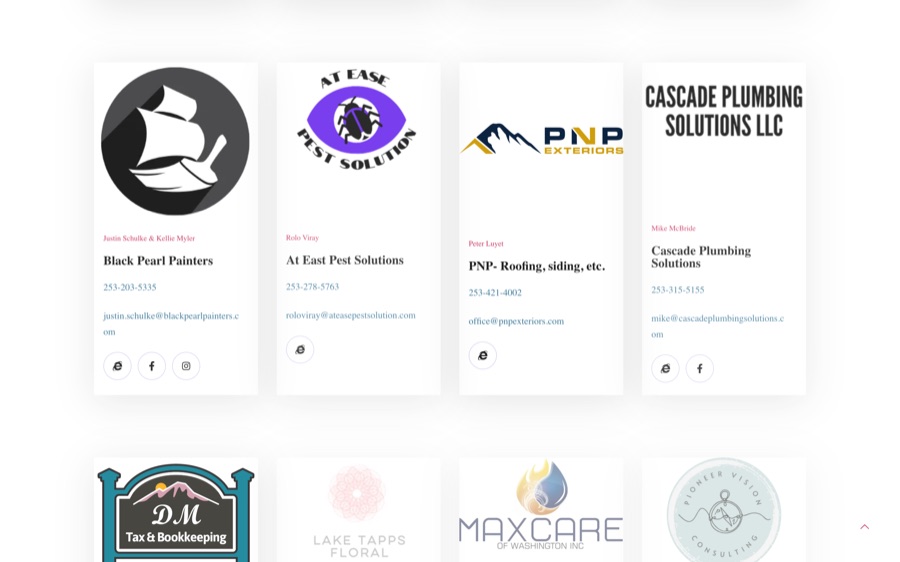
Plumbing marketing questions
How much does marketing cost for a plumbing company?
It depends on your service area and how competitive it is. A Google Business Profile cleanup and review system is inexpensive; SEO is a monthly investment that compounds; Google Ads budgets for plumbing are higher than most industries because the clicks are expensive but the jobs are valuable. Use our SEO pricing calculator for a range, or ask for an audit with a specific recommendation.
Should a plumber run Google Ads or do SEO?
Both, in sequence. Ads produce calls within weeks and should be scheduled to the hours you answer; SEO builds the service and area pages that keep producing without ad spend. Most plumbers start with the profile + ads, then let SEO take over the core services.
We get calls but they are the wrong jobs. Can marketing fix that?
Usually, yes. Wrong-job calls come from broad keywords and generic pages. Service-specific pages and campaigns, negative keywords and pricing signals on the site filter for the work you want.
Do you work with plumbers outside the Puget Sound?
Yes. Our roots are in Pierce and King counties, but the work is remote-friendly and we now take clients across the United States, the campaigns, the site and the reporting all run the same way wherever you are.
What do you need from us to start?
Access to your Google Business Profile and website, your real service list and area, the hours the phone is answered, and a few dozen photos of real jobs. Then we run the audit.
Get a free plumbing marketing audit
Send us your company name and website. We will check your Map Pack visibility, your emergency-search presence and your site’s click-to-call flow, and tell you the three fixes that will produce calls first.