
Google Ads for landscapers, concentrated in the weeks that matter
Landscaping demand arrives in a short spring window and splits into two businesses with different economics: a route business built on density, and a project business built on photographs. One ad budget spread across both underperforms at both.
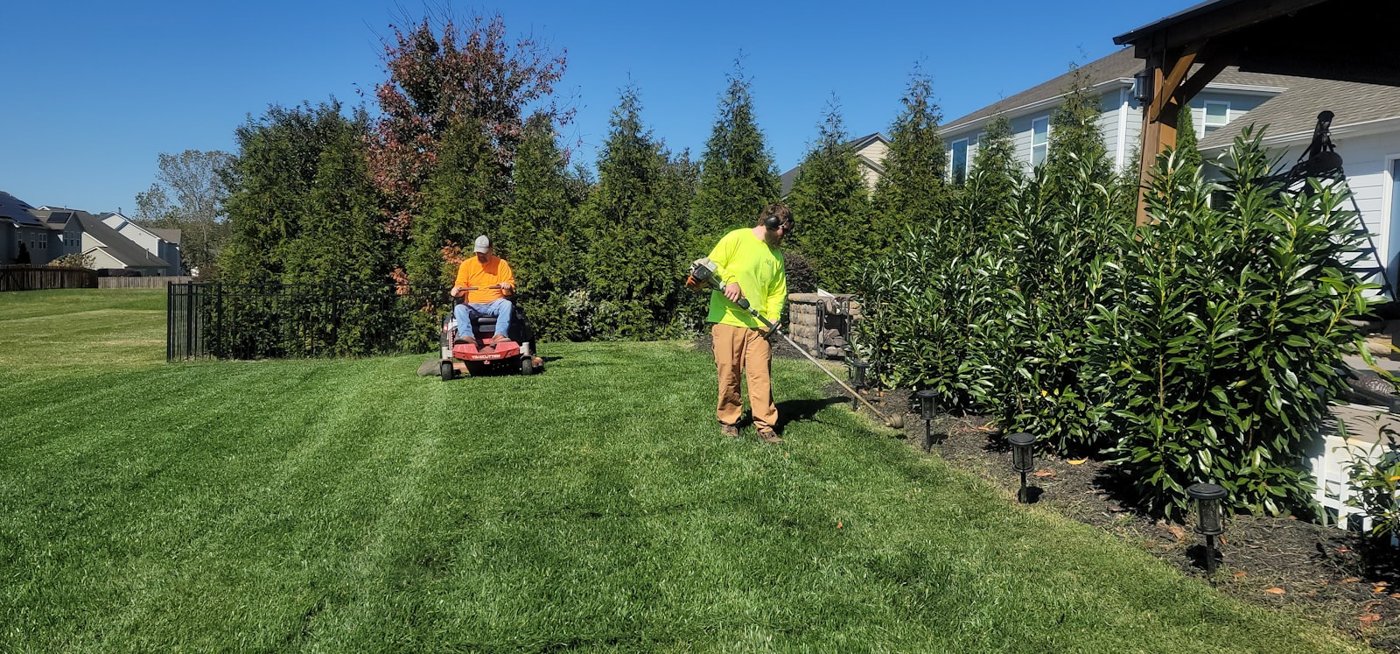
A route business and a project business, sharing a budget
Maintenance is won on price, reliability and proximity, and its profit depends on how tightly the route is packed. A contract two towns away can cost more in drive time than it earns, which makes geography more important here than in any other trade we advertise.
Design, hardscape and installation work is chosen on photographs and trust, at ticket sizes that justify far higher bids. The two need separate campaigns, separate pages and separate judgement about when to stop spending.
The searches worth paying for, and the ones that waste budget
Keywords split by business line and by season, with the project terms carrying the higher bids.
- Maintenance: "lawn care near me", "lawn mowing service" plus the town, "yard cleanup", "fertilization service"
- Projects: "paver patio installation", "retaining wall builder", "landscape design", "artificial turf installation"
- Problems: "yard drainage solutions", "standing water in yard", "moss removal lawn"
- Seasonal: "spring cleanup", "fall cleanup", "gutter and yard cleanup", "irrigation startup"
Negative keywords we add on day one
Landscaping attracts equipment, supply, employment and DIY searches in volume.
jobs · hiring · salary · mower · equipment · for sale · rental · seeds · plants near me · DIY · how to · nursery
| Search type | Example | What the searcher wants | Our response |
|---|---|---|---|
| Maintenance | “lawn care near me” | A price and reliability | Quote form that accepts photos |
| Project | “paver patio installation” | Proof of quality | Gallery page with consultation form |
| Seasonal | “spring cleanup” | A date soon | Cleanup page with availability |
| DIY | “how to level a lawn” | To do it themselves | Excluded |
How we build a landscaping account
Two core campaigns and one seasonal: Maintenance, geo-fenced tightly to the neighbourhoods where extra density is wanted, at modest bids with a quick quote form; Projects, at higher bids with an ad group per project type, landing on a gallery page with a consultation form; and a Seasonal cleanup campaign that runs for a few weeks in spring and again in autumn. All three pause when the schedule fills, because a quote you cannot honour until August is a complaint waiting to happen.
Short season, tight geography
Most of the budget belongs in the eight to ten weeks when people look at their yard and decide to act. Within that, the maintenance campaign should be drawn around route density rather than the widest area you could reach, and the project campaign can run wider because a patio justifies the drive.
Reply speed decides the maintenance market. The campaign should point at a form that collects enough to quote without a visit, because the first company to send a real number usually wins the contract.
- Budget weighted heavily to spring, with a smaller autumn push
- Maintenance geo-fenced to route areas, not the county
- Projects landing on gallery pages with a consultation form
- Pause or reduce when the schedule fills rather than collecting unserviceable quotes
- A quote form that accepts photos so most jobs can be priced remotely
What the page behind the ad has to do
Lead with photographs
Before and after galleries by project type. Landscaping is bought with the eyes.
Split the two paths
Maintenance sign-up on one path, project consultations on another, so neither confuses the other.
Give a price signal
A per-visit range for maintenance or a starting figure for a patio filters enquiries usefully.
Make quoting easy
Address, problem and a photo upload. Most maintenance work can be priced without a visit.
Show the crew
Homeowners are letting people onto their property weekly. Real photos of the team and marked vehicles help.
Explain the season
When you start, when you stop and what happens in winter. Clarity prevents most complaints.
We build or fix landing pages under web design and development; a campaign is only as good as the page it lands on.
From spring to a signed contract
Spend hard for ten weeks, then stop
An even year-round budget wastes money in landscaping. The plan should concentrate spend in the spring window, keep a smaller autumn cleanup push, and go quiet in the dead months when the same clicks cost the same and convert far worse.
We judge the account on signed contracts and on route density added, not on quote volume. A hundred quotes spread across four towns is worse for the business than forty in one.
Illustrative budget weighting through the year
Illustrative, not client dataRelative emphasis only; a real plan follows your schedule and capacity.
A hypothetical first 90 days
Scenario: a landscaping company in Sumner running three maintenance crews with occasional hardscape work, 70 reviews and a small gallery.
launch a geo-fenced maintenance campaign on the target neighbourhoods, add a quote form that accepts photos, and start weekly photo uploads to the profile.
publish patio, retaining wall and drainage pages with galleries, then launch the projects campaign at higher bids.
review contracts by area, cut the zones that produced long drives rather than density, and plan the autumn push.
Every number in a real plan comes from your own account data; we do not publish or promise results.
What we report every month
Google Ads questions from landscaping companies
When should the ads start in spring?
A fortnight before the first warm weekend. By the time the yard looks bad to everyone at once, the auction is at its most expensive and your schedule is filling anyway.
Should we advertise if we are already full?
No. Pause it. Buying contracts you cannot service creates cancellations and poor reviews, and a paused campaign is easy to restart.
Is it worth bidding on project terms?
Yes, at higher bids, provided you have a gallery to send people to. Without photographs those clicks are wasted.
How tight should the targeting be?
Tight enough that a new maintenance customer is a short drive from an existing one. Density is the whole economics of a route business.
What do you need from us to start?
Ad account access, your route map, your pricing structure and a folder of project photos.
Get a free Google Ads review for your landscaping company
Send us your company name and the neighbourhoods your crews already cover. We will tell you what a route-focused campaign would look like and what to publish before the season starts.